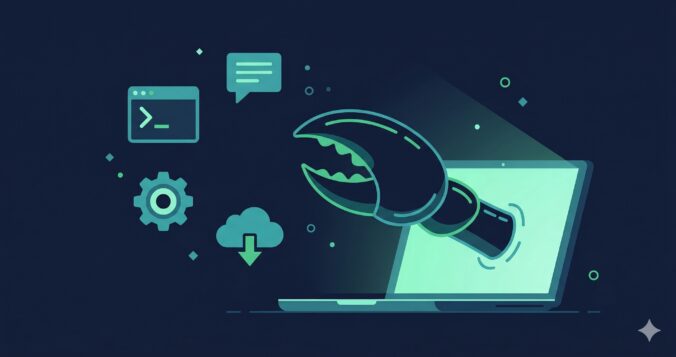
OpenClaw is an open-source AI agent that lives on your computer and talks to you through WhatsApp, Telegram, or whatever chat app you prefer. You tell it to do things — check your servers, summarize a repo, send an email — and it actually does them. Not in a hypothetical “here’s how you’d do it” way. It runs commands, reads files, calls APIs. This guide walks you through setting it up from scratch, connecting it to a messaging app, giving it useful tools, and running your first real task.
Month: March 2026

Until recently, AI was stuck in a box. You’d open ChatGPT or Gemini, type a question, get an answer, and that was it. The model couldn’t touch your files, couldn’t run a command, couldn’t check your calendar. It just talked. That era is over. AI agents can now edit code, browse the web, SSH into servers, control smart home devices, and chain dozens of steps together without you lifting a finger. Here’s how it all works.
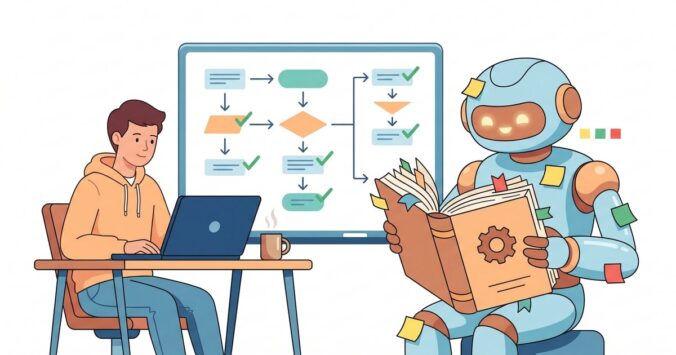
I’ve been using AI coding assistants for a while now. GitHub Copilot, ChatGPT, Cursor — you name it, I’ve tried it. They’re all impressive, but they all share the same frustrating problem: every conversation starts from zero. You explain your project structure, your conventions, your preferences… and next session, it’s all gone. You’re back to square one.
That changed when I started using Claude Code as my daily driver. Not because it’s magically smarter out of the box, but because I figured out how to make it learn. And I mean actually learn — remembering my patterns, following my conventions, and getting better at working with my codebase over time.
Here’s how I did it.
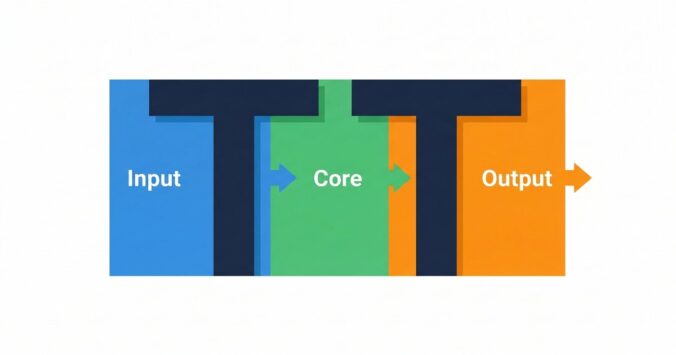
The most famous software architectures nowadays are Hexagonal, 3 Layers and MVC. The TT architecture is very similar to 3 layers but combined with the hexagonal one.
Nowadays we can assume that most companies follow a good architecture when designing their services. But that’s not true, you would be surprised to see how lots of companies are still struggling to get a good architecture in place that allows them to scale and grow rapidly.
In this post we’ll go through the most common architectures, their strengths and weaknesses, and then introduce the TT architecture — a simple and practical way to keep your codebase clean and maintainable.